Mobile Design Changes: Altering How Players Reach Table Games and Collect Rewards
Amir Koch · Aug 1, 2026

Mobile Design Changes: Altering How Players Reach Table Games and Collect Rewards
Smartphone applications have altered entry points to live dealer tables and related incentive programs since the early 2020s, with data showing steady growth in mobile sessions that outpace desktop access across multiple markets. Users now reach blackjack, roulette, and poker variants through streamlined dashboards that consolidate game lobbies, balance displays, and promotional banners into single screens, while touch gestures replace traditional mouse clicks for card handling and chip placement.
Interface Adjustments and Table Game Entry
Developers have integrated swipe-based navigation and gesture controls that allow quick transitions between table types, and these features reduce the number of taps required to join a live session. Studies from the International Gaming Institute at the University of Nevada, Las Vegas indicate that simplified menu structures increase session initiation rates because players spend less time searching for specific variants. In August 2026 several operators introduced persistent quick-join buttons that connect users to ongoing tables within two seconds, and this adjustment aligns with observed patterns where shorter loading times correlate with higher repeat visits.
Portrait mode optimization further supports extended play because vertical layouts display full table views alongside chat panels without requiring screen rotation. Researchers tracking engagement metrics note that players who use these layouts maintain longer active periods at tables compared with earlier horizontal designs that split focus across multiple windows.
Reward Delivery Through Mobile Pathways
Reward structures have adapted to mobile constraints and opportunities, shifting from static bonus codes to contextual prompts that appear during gameplay. Daily login streaks, table-specific multipliers, and progressive loyalty tiers now trigger via push notifications that link directly to eligible games. Figures released by the European Gaming and Betting Association reveal that mobile-delivered incentives account for a growing share of player retention activity because instant redemption reduces friction between earning and spending points.
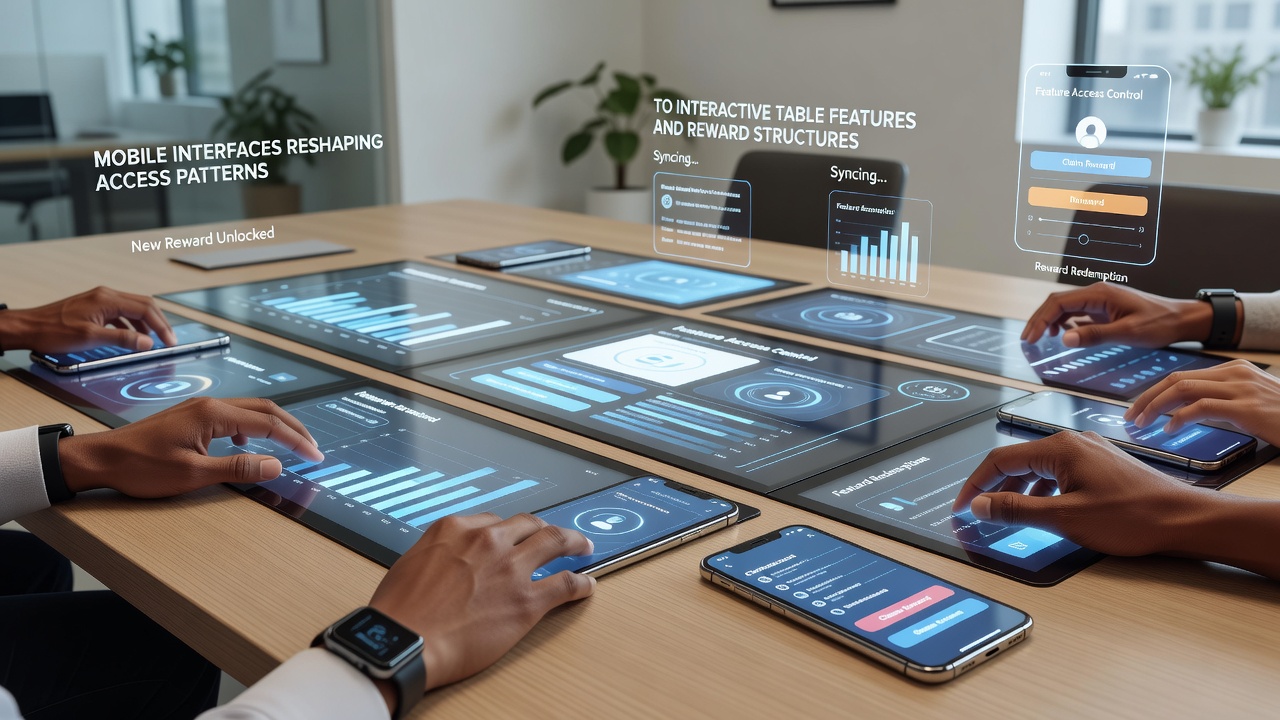
Personalized offers based on recent table activity appear in app widgets that update in real time, and this approach replaces generic email campaigns that once required separate login steps. Observers tracking reward redemption data find that in-app claims complete faster than web-based equivalents, leading operators to allocate larger portions of marketing budgets toward mobile-exclusive structures. Multiplier events tied to specific table games also surface through location-aware alerts when users open the app near participating venues or during peak hours.
Access Patterns Across Regions
Usage statistics collected in North America, Europe, and Australia demonstrate parallel trends where mobile sessions dominate table game traffic during evening hours. Canadian provincial regulators have documented similar increases in mobile table participation, and these records show that integrated reward wallets allow seamless movement between games without manual balance transfers. Australian state reports highlight comparable growth in loyalty point accumulation via smartphone interfaces that sync across multiple operator platforms.
Security layers such as biometric verification have become standard in these interfaces, enabling faster re-entry to tables while maintaining compliance with regional identification requirements. The combination of reduced login friction and immediate reward visibility creates feedback loops where players return to tables more frequently to unlock tiered benefits.
Conclusion
Mobile interface refinements continue to influence both entry methods for interactive table features and the timing of reward distribution, with data from multiple regulatory and research bodies confirming sustained shifts in player behavior. Operators who align app layouts and notification systems with observed access patterns maintain higher engagement levels across table products and loyalty programs. These developments reflect broader industry adjustments to device-driven usage that began years earlier and show no signs of reversal in current metrics.