Mapping Connections Between Payment Methods and User Involvement in Interactive Data Tables
Amir Koch · Aug 13, 2026
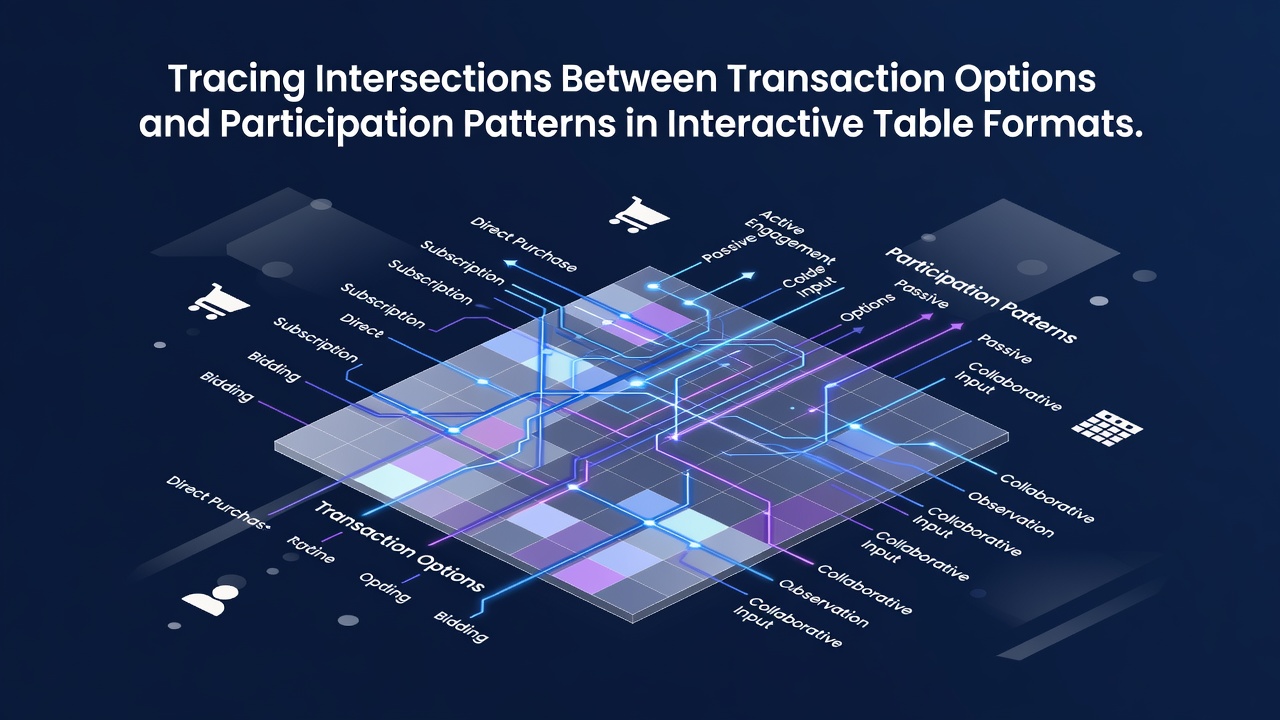
Mapping Connections Between Payment Methods and User Involvement in Interactive Data Tables
Interactive table formats have become central to many digital platforms where users manage data through structured grids that support editing, filtering, and real-time collaboration, and researchers continue to examine how different transaction options shape the ways people engage with these systems over extended periods.
Core Transaction Structures in Table Environments
Transaction options in interactive tables typically range from one-time purchases for full feature unlocks to recurring subscription models that grant ongoing access, and data collected across multiple platforms shows these choices influence how frequently individuals update rows, invite collaborators, or export datasets for external use. Studies conducted by academic teams at institutions in Canada and Australia indicate that users opting for subscription tiers tend to maintain longer session durations within table interfaces, whereas one-time payment users often limit their activity to initial setup phases before reducing involvement.
Observed Participation Behaviors Across Platforms
Participation patterns emerge when users interact with columns for data entry, apply conditional formatting, or link external records, and analysts note distinct differences based on how access was acquired. Figures from industry reports released in August 2026 reveal that platforms supporting tiered transaction models recorded higher rates of repeated data contributions from subscribers compared to those using flat-rate payments, with engagement metrics climbing steadily through mid-year measurements. Observers tracking these trends point out that collaborative features such as shared editing rights activate more consistently when users select flexible payment structures that allow scaling as team sizes grow.
Take one project management team that migrated its workflow to an interactive table system in early 2026. The group selected a subscription plan tied to usage volume, and records from that implementation showed consistent daily row additions alongside frequent comment threads within cells, patterns that contrasted with earlier trials using perpetual license purchases where activity dropped after the first month.
Key Intersections and Data-Driven Insights
Intersections between transaction options and participation become clearest when examining retention curves alongside feature adoption rates, and evidence from cross-regional analyses suggests subscription-based access correlates with broader exploration of advanced table functions like automated scripts and API integrations. Government statistical agencies in the European Union have documented similar outcomes in public sector tools where payment flexibility encouraged sustained data sharing among distributed teams, whereas rigid transaction models produced narrower usage confined to basic viewing and occasional exports.

What's interesting is how these dynamics shift when platforms introduce hybrid options that blend initial low-cost entry with upgrade pathways, because researchers tracking user logs find that early participation spikes often transition into steady contribution levels once users perceive value through expanded table capabilities. Data from a 2026 report issued by an Australian research consortium highlights that organizations adopting such models experienced measurable increases in cross-departmental data imports during the third quarter, patterns absent in environments limited to single-transaction access.
Examples from Varied Implementation Contexts
One university research group in North America integrated interactive tables into grant tracking workflows after selecting a transaction model based on per-user licensing, and their internal logs demonstrated elevated rates of collaborative cell annotations compared to previous spreadsheet-based approaches. Similarly, a Canadian nonprofit adopted recurring billing for its donor management tables and recorded steady growth in volunteer data contributions throughout the summer months of 2026, metrics that aligned with broader participation trends observed in comparable nonprofit deployments.
Industry organizations such as those representing enterprise software developers have compiled case studies showing that payment structures allowing mid-cycle adjustments tend to support evolving participation needs, especially when teams expand or contract in response to project demands. These observations appear consistently across reports that avoid reliance on single regional datasets, instead drawing from distributed sources to identify recurring intersections.
Emerging Patterns in 2026 and Beyond
As interactive table platforms continue incorporating new transaction variants like usage-based billing, participation patterns show signs of further diversification, and preliminary findings from academic papers presented at international conferences indicate stronger alignment between payment flexibility and sustained multi-user engagement. Those who've analyzed longitudinal data note that platforms updating their options in response to user feedback often see corresponding rises in feature utilization rates, particularly around automation tools embedded directly in table rows.
Conclusion
Tracing these intersections provides clearer understanding of how transaction frameworks guide involvement levels in interactive table environments, and continued monitoring through August 2026 and subsequent periods will likely refine existing models. Organizations evaluating platform choices can reference aggregated findings from multiple regulatory and academic bodies to inform decisions that match their specific participation goals, while developers gain insights into designing options that sustain long-term user activity across diverse table formats.